ServicesWindshield Protection Film
Windshield Protection Film in Placerville
Windshield protection film is a thin, optically clear layer installed on the outside of your glass. It takes the rock strikes and fine pitting that would otherwise mark the windshield, and when it wears, the film is replaced instead of the glass.
A sacrificial layer for the glass you already have
A windshield faces forward into everything the road throws up. Small stones crack it, and years of grit leave a frosted haze that scatters light from oncoming headlights at night. Windshield protection film sits between that debris and the glass. It flexes on impact, spreads the force, and carries the wear itself.
We see it as maintenance rather than an upgrade. The film is designed to be removed and renewed, so the original windshield, its seal and any camera calibration behind it can stay untouched for much longer. For drivers who regularly head up toward Pollock Pines or over the summit in winter, where traction sand stays on the road for weeks, that difference shows up quickly.
It is not window tint. The film is clear and is made to keep visibility as it was. If you also want heat rejection on the side and rear glass, that is a separate conversation about our window tint options.
What the install includes
Glass inspection first
Before anything goes on, we look over the windshield under good light. Existing chips, cracks and pitting are noted and shown to you, because film protects glass going forward but does not repair damage that is already there.
Decontamination and prep
The outer glass is cleaned and clayed to lift baked-on grime, wiper residue and old water spots. Film only looks as clear as the surface underneath it, so this step gets real time.
Precision fit to your windshield
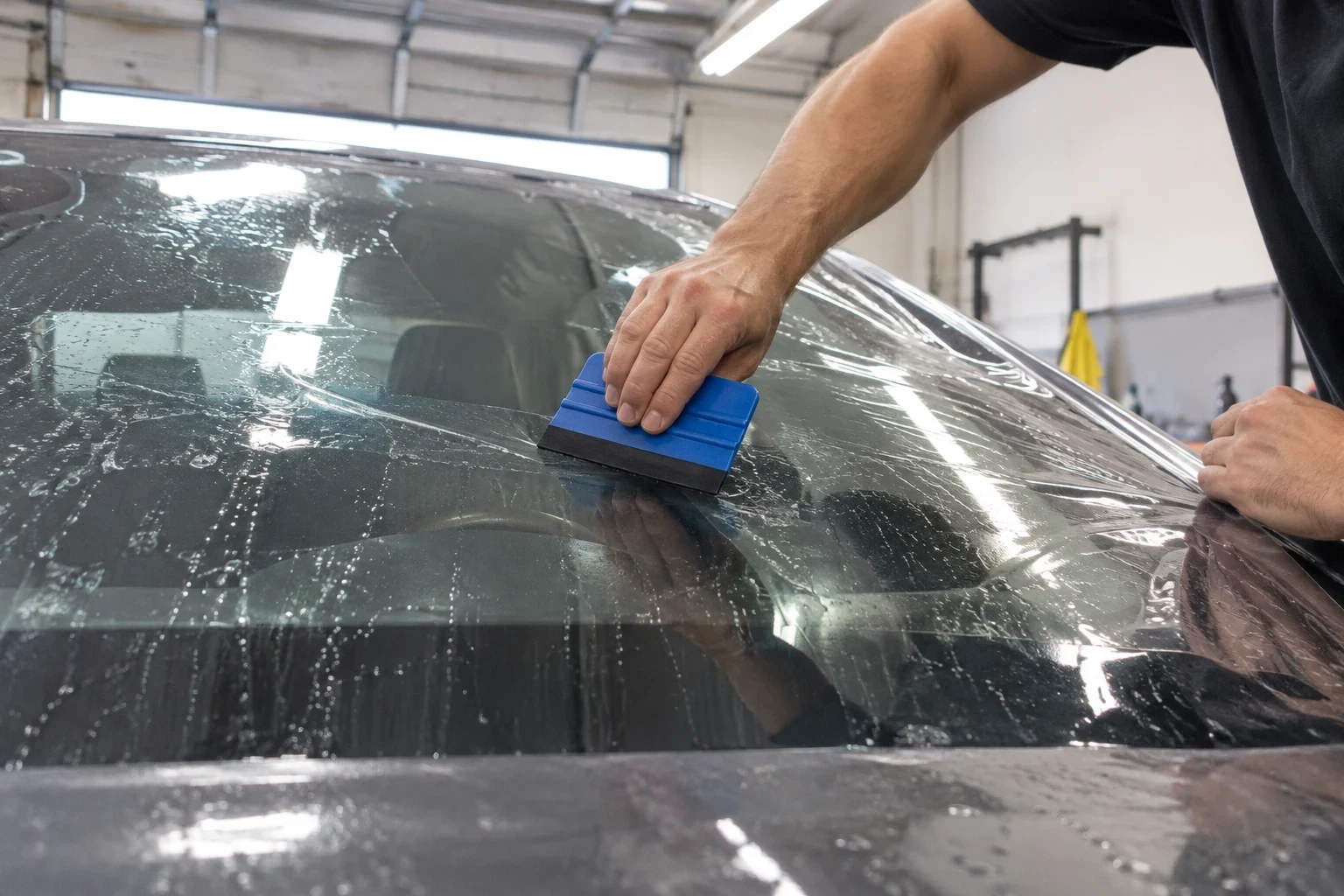
The film is cut to the shape of your glass and laid on wet, then squeegeed out so it adheres evenly from edge to edge. We work carefully around the frit band, rain sensors and the camera area at the top of the glass.
Curing and first look
We check the finished install for clarity and edge lift before the car leaves the shop. Some light haze or small moisture pockets are normal while the film cures, and we explain what to expect over the following days.
Care guidance
You leave with plain instructions on wipers, washing and what to avoid while the film settles. Good wiper blades and gentle cleaners help the film last longer.
When windshield film makes sense
- You just replaced the windshield
- New glass is the best time to protect it. Film on a fresh windshield keeps it in that condition instead of starting the chip count over.
- Your car has driver-assist cameras
- Replacing a windshield on many newer vehicles means recalibrating the forward camera. Keeping the original glass intact avoids that step and the downtime that comes with it.
- You drive gravel, mountain roads or the freeway daily
- Long commutes behind trucks and regular trips on sanded winter roads are hard on glass. Film is built for exactly that kind of steady wear.
- Night glare is getting worse
- Fine pitting on older glass shows up as starbursts around headlights. Film will not undo existing pitting, but on newer glass it keeps that haze from forming.
- You already protect the paint
- If the front end wears paint protection film, the windshield is the one forward surface still taking every hit. Adding film there finishes the job.
How the day runs at our shop
- 1
Consultation by phone
We talk through your vehicle, how you drive and what the glass looks like now. You get a clear idea of the film, the timing and a quote before you bring the car in.
- 2
Drop-off and inspection
You bring the car to the shop at the scheduled time. We walk the windshield with you and point out any existing damage before work begins.
- 3
Prep and install
The glass is decontaminated, the film is fitted and applied wet, and the edges are finished cleanly. The car stays indoors throughout, away from dust and wind.
- 4
Pickup and walkthrough
We show you the finished glass, go over the curing period and answer any questions about wipers or washing. Then you are back on the road.
What moves the price
Windshield film is priced per vehicle because no two windshields are the same shape or size. A quick call gets you a quote based on your car rather than a general figure. These are the main things that change it.
- Windshield size and curvature
- Large, steeply raked or heavily curved glass takes more film and more careful shaping. Trucks, vans and some sports cars fall into this group.
- Sensors and cameras
- Rain sensors, heads-up display zones and camera housings add detail work around the top of the glass.
- Film choice
- Different films vary in thickness, clarity and how well they resist wiper wear. We explain the tradeoffs so you can choose what fits how you drive.
- Condition of the glass
- Heavy wiper scratches, old adhesive or stubborn mineral deposits need extra prep before film can go on cleanly.
Windshield film questions
- Will the film affect how I see through the windshield?
- The film is made to be optically clear. Once it has cured, most drivers stop noticing it. During the first few days you may see slight haze or small water pockets, which clear as the film dries out.
- Does it stop every rock chip?
- No film stops everything. It absorbs most of the everyday strikes that would chip or pit bare glass, but a large stone at highway speed can still get through. We would rather tell you that plainly than oversell it.
- Can I still use my wipers?
- Yes. Normal wiper use is fine once the film has cured. Fresh, clean blades are worth keeping on the car, since worn rubber and trapped grit are what wear film fastest.
- What happens when the film wears out?
- That is the point of it. When the film becomes scuffed or pitted, we remove it and install new film, and the glass underneath is still in the condition it was when the first layer went on.
- Will it interfere with my driver-assist camera?
- We look at your vehicle's camera and sensor layout during the consultation. In most cases we can work around those areas so the systems behave as they did before.
- Is this the same as window tint?
- No. Windshield protection film is clear and exists to protect the glass. Window tint is about heat rejection, UV protection and privacy on the other windows, and we cover it on our Window Tint page.
Keep the glass you have
A short phone call covers your vehicle, the film options and the timing. We serve drivers from Placerville, Cameron Park, El Dorado Hills and the surrounding area at our shop.