ServicesWindow Tint
Window Tint in Placerville
We install carbon and ceramic window tint that keeps your cabin cooler, blocks UV that fades seats and dashboards, and stays clear for years. You bring the car to our shop, and we help you pick a film and shade that fit how you drive.
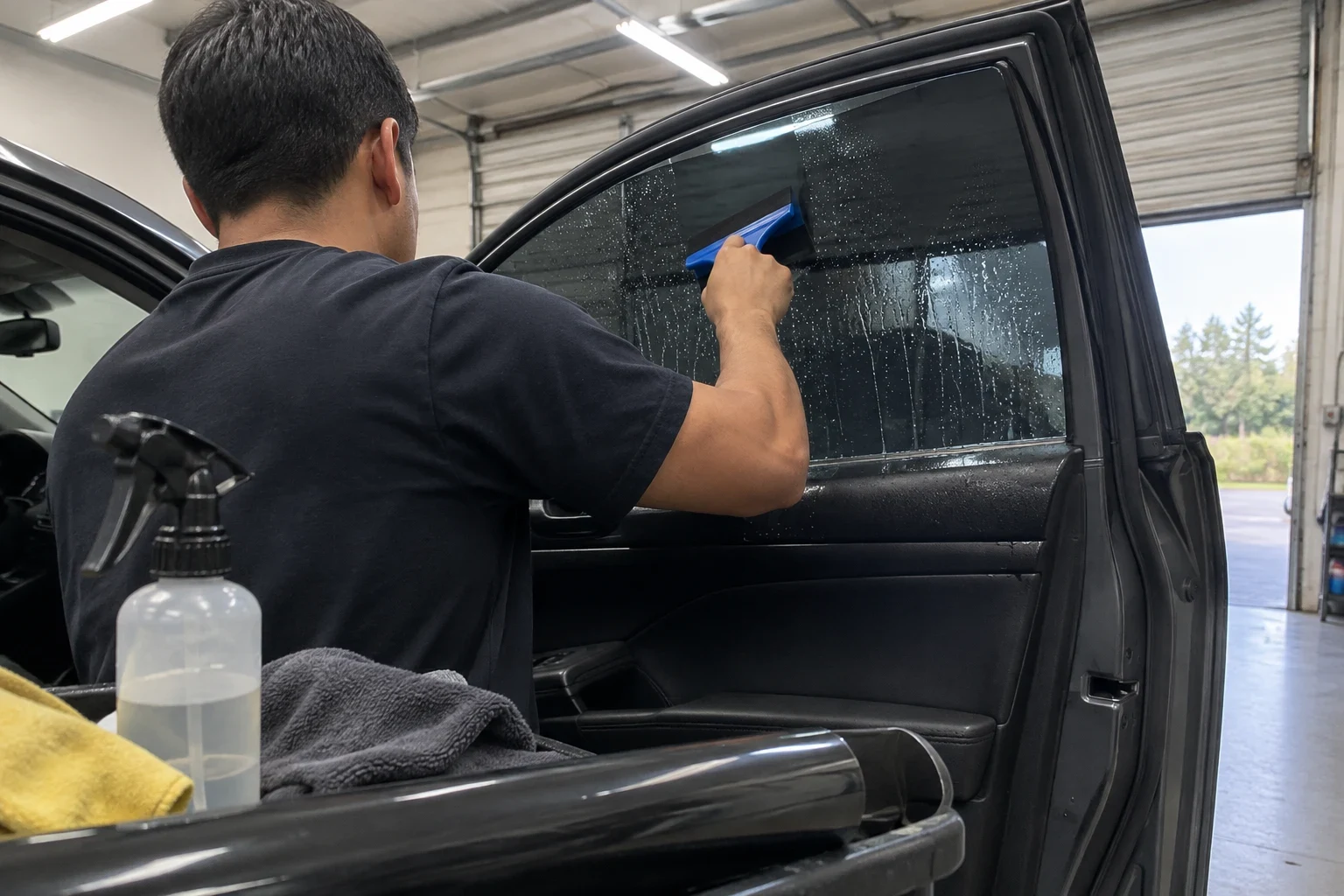
Film chosen to last, not just to look dark
Good window tint is quiet work. It blocks heat and ultraviolet light every day you drive, and it protects the leather, plastics and stitching behind the glass from drying out and cracking. The right film does this for years without turning purple, peeling at the edges or filling with bubbles.
We steer most drivers toward carbon or ceramic film. Neither uses metal, so your phone, GPS and keyless entry work normally. Ceramic film rejects more infrared heat, which is the part you feel on your arms and the steering wheel after the car sits in the sun. Through a long foothill summer, that difference shows up every afternoon.
Tint is also the right call when you are replacing old film. Cheap dyed tint fades and bubbles as its adhesive breaks down. We strip it, clean the glass properly and install film that holds its color.
What a window tint install includes
A film and shade consultation
We show you samples on glass so you can see how each shade looks from inside and out. We explain heat rejection and visible light numbers in plain terms.
Legal shade guidance
California sets limits on front side windows and the windshield. We tell you what is allowed on each window before anything is cut, so you are not guessing.
Glass prep and cleaning
Every window is cleaned and scraped of grit and old residue. Dust trapped under film is the most common cause of specks you notice later.
Precision-cut patterns
Film is cut to the exact shape of your glass and finished close to the edges, with clean lines around the dot matrix and defroster lines.
Heat-formed rear glass
Curved back windows get film shrunk to shape with heat before it goes on, so it lies flat instead of fingering or lifting.
Old tint removal when needed
Faded or bubbled film comes off with steam and patient scraping, done carefully around defroster grids so they keep working.
Signs it is time for new window tint
The tint has turned purple
That color shift means the dyes in an older film have broken down. It no longer blocks much heat or UV.
Bubbles or peeling edges
Bubbles come from adhesive failure. They will spread, and they make the glass harder to see through, especially at night.
A cabin that bakes in the sun
If the steering wheel is too hot to hold and your air conditioning struggles, your glass is letting through heat a ceramic film would stop.
Fading dashboard or cracked seats
Interior surfaces dry out under UV over time. Film that blocks it slows that wear on the parts that cost the most to replace.
A new car with factory privacy glass only
Factory dark glass on rear windows is tinted for privacy, not heat. It usually blocks little infrared, and the front windows have no film at all.
How your tint appointment runs
- 1
Choose film and shade
We go over samples and legal limits on the phone or when you arrive, and agree on the film for each window before work starts.
- 2
Drop the car at our shop
We cover door panels and electronics near the glass, then clean every window and remove old film if there is any.
- 3
Cut, form and install
Patterns are cut, rear glass film is heat-formed, and each piece is laid and squeegeed to push out water and air. Most cars are ready the same day.
- 4
Walk-through and curing
We check each window with you in good light. Keep the windows rolled up for a few days while the film cures; slight haziness during that time is normal moisture drying out.
What affects the cost of window tint
Two cars rarely price out the same. The film you choose matters most, followed by how many windows you want covered and the shape of the glass. We give you a clear quote by phone before we start, and the price we quote is the price you pay for that work.
- Film type
- Ceramic film costs more than carbon because of the materials that block infrared heat. Many drivers find the cooler cabin worth it.
- Number of windows
- Front sides only, a full car, or adding a sunroof or windshield strip all change the scope.
- Vehicle and glass shape
- Steeply curved rear glass and small quarter windows take more time to form and fit than flat glass on a pickup.
- Removing old film
- Stripping aged tint and adhesive is slow, careful work, especially around rear defroster lines, and it adds time to the job.
Window tint questions
Something not covered here? (530) 319-5584
How dark can I legally go in California?
California requires front side windows to let through most visible light, and film on the windshield is limited to a strip across the top. Rear side windows and the back glass can be darker as long as the car has two outside mirrors. We walk you through what fits each window before we cut anything.
Will ceramic tint interfere with my phone or GPS?
No. Ceramic and carbon films contain no metal, so they do not block cell, GPS, radio or keyless entry signals. That is one reason we recommend them over older metallic films.
How long until I can roll my windows down?
Plan on keeping them up for a few days. Curing is faster in warm, dry weather and slower when it is cold or damp. Rolling a window down too early can catch the bottom edge and lift the film.
How do I clean tinted windows?
Use a soft microfiber towel and a cleaner without ammonia, or plain water with a drop of mild soap. Ammonia can dry out film over time, and paper towels can leave fine scratches. Avoid scraping the inside glass with anything sharp.
Can you tint just the front windows to match my factory glass?
Yes, though a legal front shade will not exactly match dark factory privacy glass. We show you samples side by side so you can see how close it looks. Many drivers also add film over the rear factory glass for the heat rejection.
Should I add other protection at the same visit?
Some drivers pair tint with windshield protection film to guard against rock chips, or with ceramic coating on the paint. We can talk through what makes sense for your car when you call.
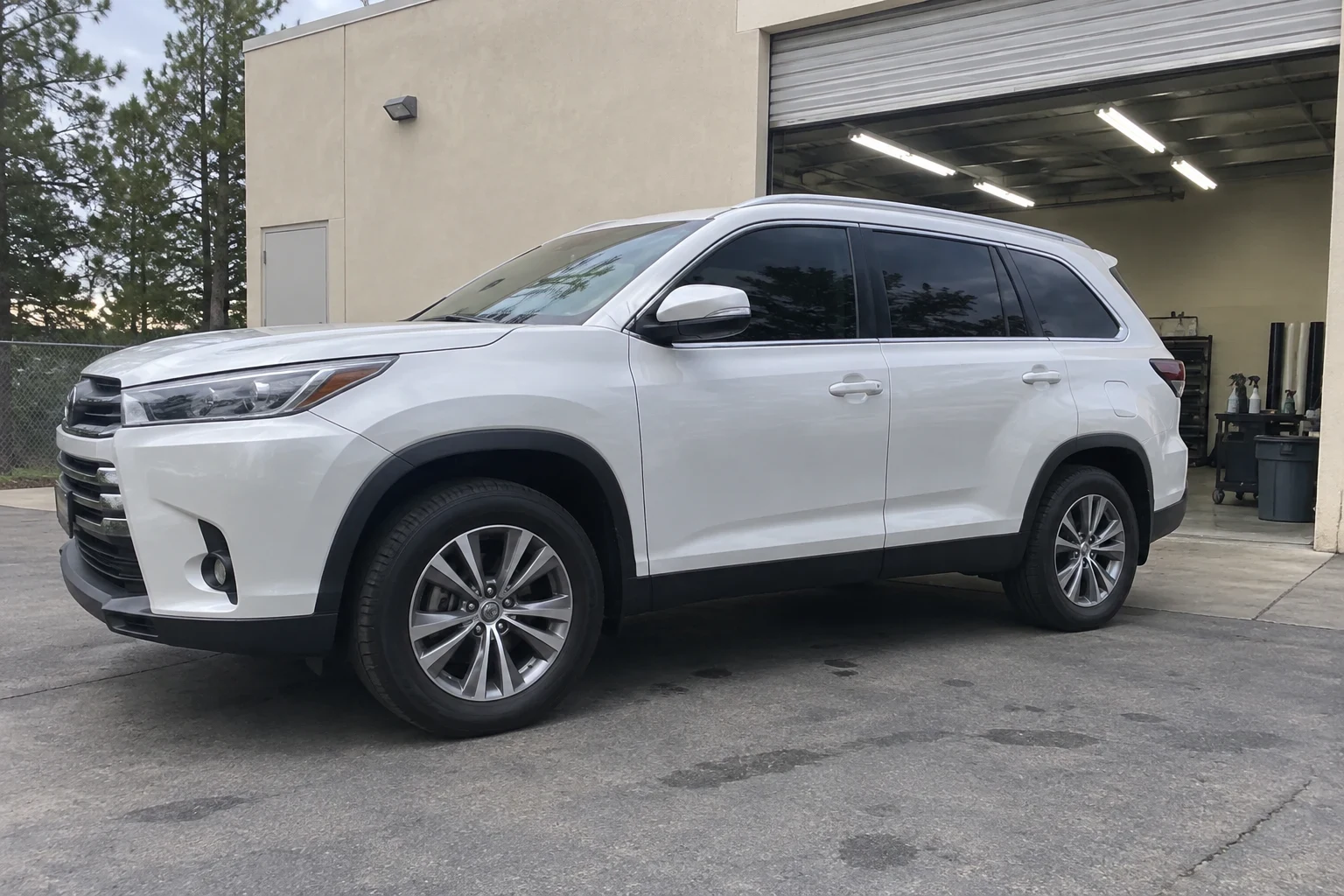
Ready for cooler, protected glass
Tell us about your car and how you use it, and we will recommend a film and shade that suits it. We serve drivers from Placerville and the surrounding area at our shop.